Cryptohopper review: what paper trading can establish
Separate simulator configuration, marketplace seller evidence and exchange execution before reading a bot result as account performance.
Separate the platform from the strategy
Cryptohopper is assessed as automation and simulation infrastructure. A platform account, configured bot and marketplace signal seller are three distinct review subjects. Name all three if your intended workflow combines them. Useful software does not establish that every strategy distributed through it has an economic advantage.
This page is a public-document assessment, not a real-money bot trial. Before comparing alternatives, describe whether you need simulation, automated execution or a source of trade ideas. Save the settings and product tier relevant to that need rather than combining unrelated features into one performance verdict.
Simulation access has conditions
The official paper-trading product page describes practice without an exchange account. The help article notes that available simulator features and bot limits depend on the subscription. Neither document establishes unlimited permanently free access or equivalence between simulated and real-account outcomes. Confirm the current tier and exact workflow directly.
Do not change an existing real-money configuration merely to explore a simulator without first reading the documented consequences. A separate practice setup with clearly labelled balances makes comparison easier. The review does not direct account actions or claim that this desk has reproduced the interface with funds.
Design a small rehearsal before reading the curve
Use a fictional bot rule that can open one position and reject a duplicate entry identifier. Send one valid event, the same event again, a late event and a cancellation. The rehearsal asks whether the configuration and event policy behave consistently; it is not searching for a profitable parameter set.
Record the requested action, simulator response and outstanding state after each step. If a rule depends on bar completion, document which observation is actually available at the decision time. A positive simulated balance cannot repair a rule that uses later information or accidentally opens the same intended exposure twice.
Make the live boundary explicit
A simulator applies its own execution model. A real exchange adds acknowledgement timing, order constraints, liquidity, incomplete fills and account-specific charges. Record which of these the simulator models, which it approximates and which it leaves outside the exercise. Unknown handling should remain unknown rather than receive a convenient zero-cost assumption.
For an illustrative comparison, keep the strategy settings and evaluation interval fixed while changing one declared fill or cost assumption. Label the result a sensitivity exercise. It can reveal dependence on optimistic assumptions, but it cannot estimate the actual slippage distribution for a venue that was never observed.
Ask a marketplace seller for population evidence
A seller's example message should identify the instrument, side, entry condition, publication time and amendment policy. Request the full eligible history, including expired calls and losses, before calculating a rate. Keep seller-reported results distinct from platform-generated simulation and from a subscriber's own account statement.
Include platform and seller charges separately in the cost comparison. An inexpensive simulator can still be paired with an inadequately evidenced strategy. Conversely, an incomplete history in this assessment is not proof that no legitimate record exists; it is the precise condition that remains to be resolved.
What remains before a subscription decision
A suitable buying record lists the exact features needed, subscription constraints, event-handling policy, exchange compatibility and unresolved seller evidence. Avoid an automatic best-bot rank based on the number of advertised functions. Testability and economic validation are separate milestones.
This review makes no observed profitability, uptime, marketplace-quality or security claim. Its positive practical finding is narrower: official simulation documentation provides a starting point for configuration rehearsal. The buyer still needs current account rules and independently interpretable strategy records before treating the workflow as a validated trading implementation.
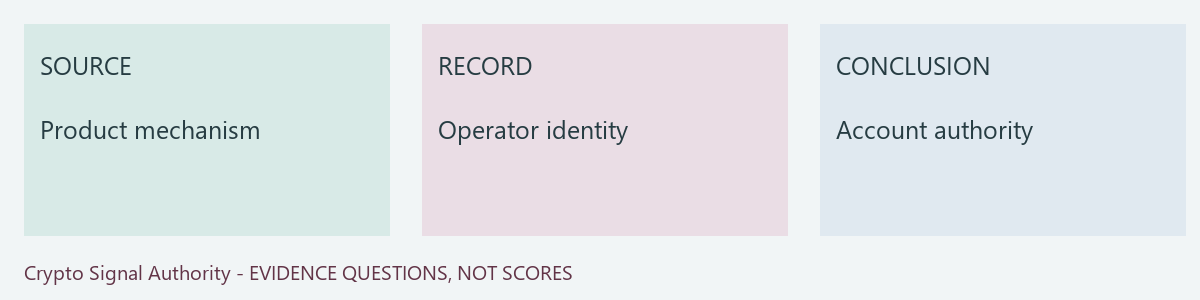
Evidence handoff
| Check | Record | Boundary |
|---|---|---|
| Configuration rehearsal | Event and resulting state | Passing logic is not market validation |
| Seller assessment | Complete eligible call history | Marketplace presence is not an audit |
| Live comparison | Exchange acknowledgements and costs | Paper fills are not broker fills |
 Blank evidence CSV
Column definitions: product_tier, bot_version, seller_identity, setting_version, event_id, received_at, requested_action, simulator_response, duplicate_policy, expiry_policy, fill_assumption, cost_assumption, remaining_state, live_gap.
No example trade or user record is stored in the download. Keep credentials and personal account identifiers out of shared copies.
What the new packet adds, and what it does not
The authored call-and-event workbook complements the existing detailed simulation review without adding a real installation. A paper result and an exchange fill remain separate objects. Current tier limits, configuration and chosen marketplace seller need direct confirmation. The gross-to-net illustration has no authentic quantities or account weights. No marketplace-wide success rate, actual bot return or live emergency-stop certification is inferred from these educational rows.